|
|||||
|
|||||
|
|||||
|
|||||
|
|||||
|
|||||
|
|||||
 |

























Present Position:
Senior Transportation Fellow, Retired, and
Associate Director, Retired
Virginia Tech Transportation Institute
Paul T. Norton Professor Emeritus
Dept. of Industrial and Systems Engineering, Virginia Tech
Education:
Ph.D.: Cornell University, Ithaca, New York, September, 1961
Major: Electrical Engineering, Minors: Electronics, Applied
Mathematics
B.S.: (Honors) University of Illinois, Urbana, Illinois, June, 1958
Electrical Engineering
Registration:
Registered Professional Engineer in the Commonwealth of Virginia,
Cert. Number 6244 (June, 1972 – May, 2010)
Main Research Accomplishments:
• Use of frequency-domain sampling to achieve signal delays (Wierwille, 1961; 1965).
• Development of a theory and method for correlation of nonstationary signals (Wierwille, 1965; 1967; 1968).
• Contributions to the optimal control of a flexible launch vehicle (Rynaski, Whitbeck, and Wierwille, 1966).
• Development of a method for multi-facility location using hyperboloid approximation (Eyster, White, and Wierwille, 1973).
• Development of motion base, computer controlled simulators (Wierwille, 1973).
• Development of instantaneous measures of mental workload (Wierwille, 1981; Antin and Wierwille, 1984).
• Evaluation of a variety of mental workload estimation techniques using graded tasks as independent variables (Connor and Wierwille, 1983; Wierwille and Connor, 1983; Wierwille, 1983; Wierwille, Rahimi, and Casali, 1985; Skipper, Rieger, and Wierwille, 1986; Wierwille and Eggemeier, 1993).
• Development of algorithms for detection of driver drowsiness; Invention of PERCLOS, a driver drowsiness measure (Skipper and Wierwille, 1986; Hardee, Dingus, and Wierwille, 1986; Dingus, Hardee, and Wierwille, 1987; Wierwille, 1999).
• Determination of reasons for driver uneasiness in simulators (Frank, Casali, and Wierwille (1988).
• Examination of the effects of age on instrument panel performance (Wierwille, 1990).
• Conduct of a systematic examination of driver pedal errors (Wierwille, 1991; Rogers and Wierwille, 1998).
• Development of recommendations for direction of motion stereotypes for in-vehicle controls (Wierwille and McFarlane, 1991;1993).
• Development of an initial model of driver visual sampling (Wierwille, 1992; 1993).
• Evaluation of driver drowsiness by trained raters (Wierwille and Ellsworth, 1994).
• Development of the relationship between crash likelihood and visual attentional demand of instrument panel tasks (Wierwille,1995; Wierwille and Tijerina,1998).
• Conduct of the first comprehensive human factors study of an in-car navigation system (Antin, Dingus, Hulse, and Wierwille, 1990; Wierwille, Hulse, Fischer, and Dingus, 1991; Wierwille, Antin, Dingus, and Hulse; 1998).
• Systematic examination of driver errors in operating environments (Wierwille, Hankey, Kieliszewski, Medina, and Dingus, 2001; Wierwille, Medina, Hanowski, Hankey, and Lee, 2005).
• Study of rear lighting design changes resulting in reduction of rear-end crashes (Wierwille, Lee, and DeHart, 2003).
• Examination of the use of aspheric and convex rear-view mirrors by drivers (Wierwille, Spaulding, and Hanowski, 2005; Wierwille, Schaudt, Gupta, Spaulding, Wiegand, and Hanowski, 2007).
• Development and testing of concepts for use of video in heavy vehicles to reduce blind spots and increase safety (Wierwille, Schaudt, Fitch, and Hanowski, 2007).
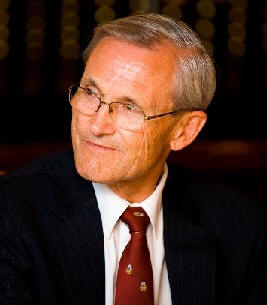
Dr. Walter W. Wierwille
June, 2009
